Wilkes University’s Center for Continued Learning will host guest speaker Larry Bulanda from 2 to 4 p.m. on Wednesday, April 29, on the second floor of the Henry Student Center.
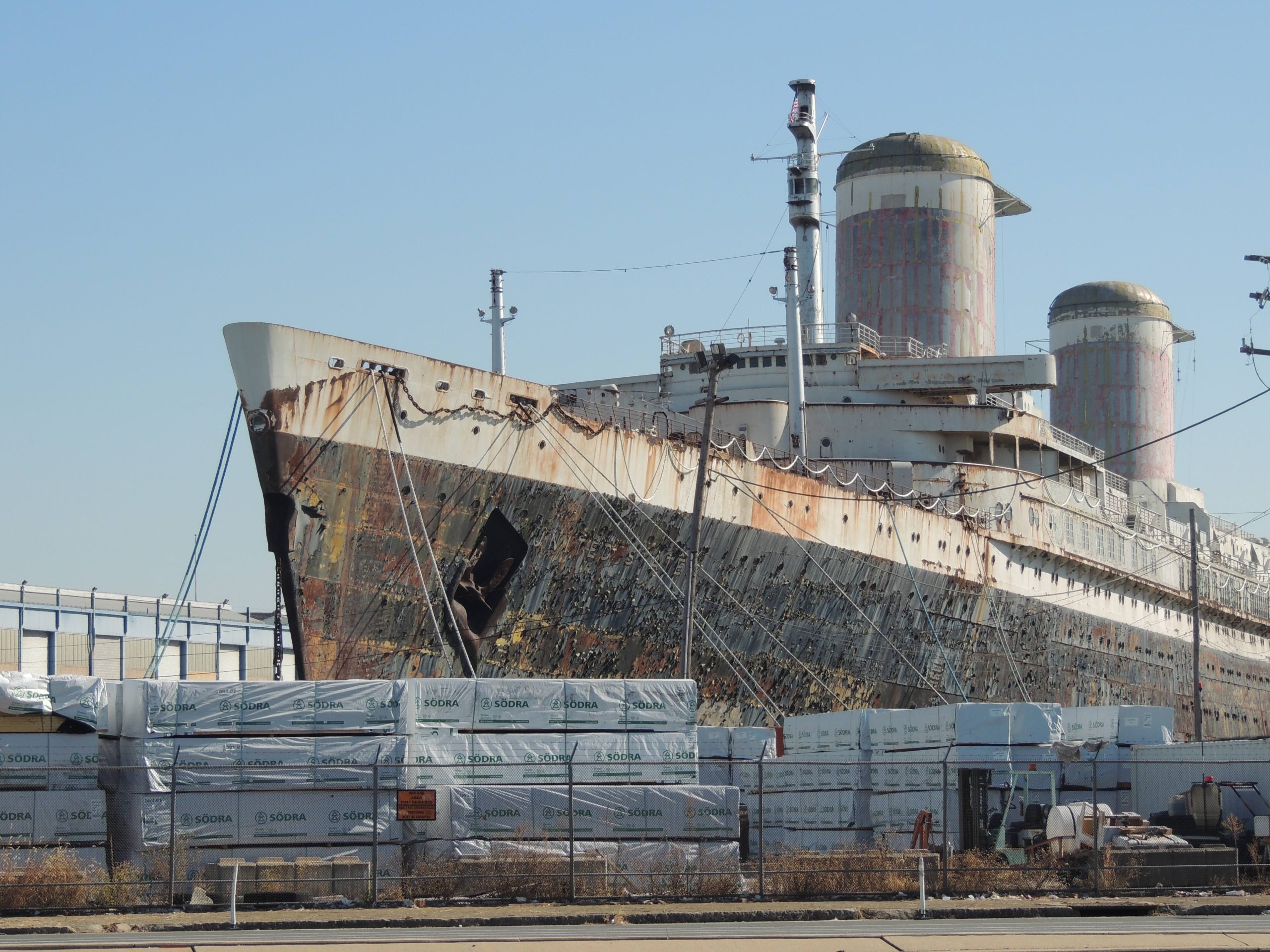
Bulanda, a retired electrical engineer, will visit campus for an in-person discussion of his passion for the SS United States and the ocean liner’s future as the world’s largest artificial reef.
The SS United States, an ocean liner often referred to as America’s Flagship, broke the world speed record for a trans-Atlantic crossing in 1952 on her maiden voyage to England. She received the Blue Riband, an award for the fastest liner, and the record stands to this day. The ship also bested speed records set by such European liners as the Queen Mary, the Queen Elizabeth and the Normandie, vessels world renowned at a time when sailing was the only way for travelers to cross the Atlantic.
With commercial air travel dominating the trans-Atlantic market, the SS United States was removed from service in 1969. The ship sat dormant for years waiting for potential buyers. After being stripped of furnishings, the vessel was towed to Philadelphia and moored for 30 years.
While under ownership of the SS United States Conservancy, several investors showed interest in acquiring the ship, but nothing materialized. Following a legal battle, Okaloosa County, Florida, purchased the vessel. This spring, the SS United States will be sunk and will transform into the world’s largest artificial reef.
“At first, I was very sad that they were going to sink it, then I thought there have been so many ships built over the years, you just can’t preserve everything. It’s going to be at the bottom of the ocean, but it’s better than turning it into a bunch of razor blades,” says Bulanda. “It is valuable from that point of view, to have that habitat for sea life. It will serve a good purpose.”
Bulanda developed an interest in the SS United States and its original purpose as an engineering marvel in 1981 when he worked for Newport News Shipbuilding, the shipyard that built the vessel. “There’s a lot of pride that the employees take in the ships that they built. There were some guys I used to work with back in the early 80s, they actually had a connection to the ship,” says Bulanda. “There were a lot of stories that were passed around. Even having never been on the boat, I picked up the old stories. The more you learn, it’s like you get hooked. It’s such an interesting story, it just draws you in.”
His storied 42-years as an engineer included positions with major defense and communications corporations. Bulanda closed out his career with 10 years at the Johns Hopkins University Applied Physics Laboratory in Laurel, Maryland. His work included nuclear reactor plant design for the Nimitz class aircraft carriers, the aviation systems of the Ford class aircraft carriers and interplanetary spacecraft, as well as several highly classified projects.
Since his retirement, Bulanda has continued his research on the SS United States and is now engaged in educating others about the ship. With the U.S. celebrating a milestone this summer, he decided to share his knowledge of this piece of maritime history. “It was the pride of the country, and now it’s been forgotten,” says Bulanda. “With America250, this is a good time to tell that story.”
The presentation is free and open to the public, but registration is required. For more information or registration, choose Personal Enrichment at wilkes.edu/continuedlearning.
For any questions, please email margaret.petty@wilkes.edu.