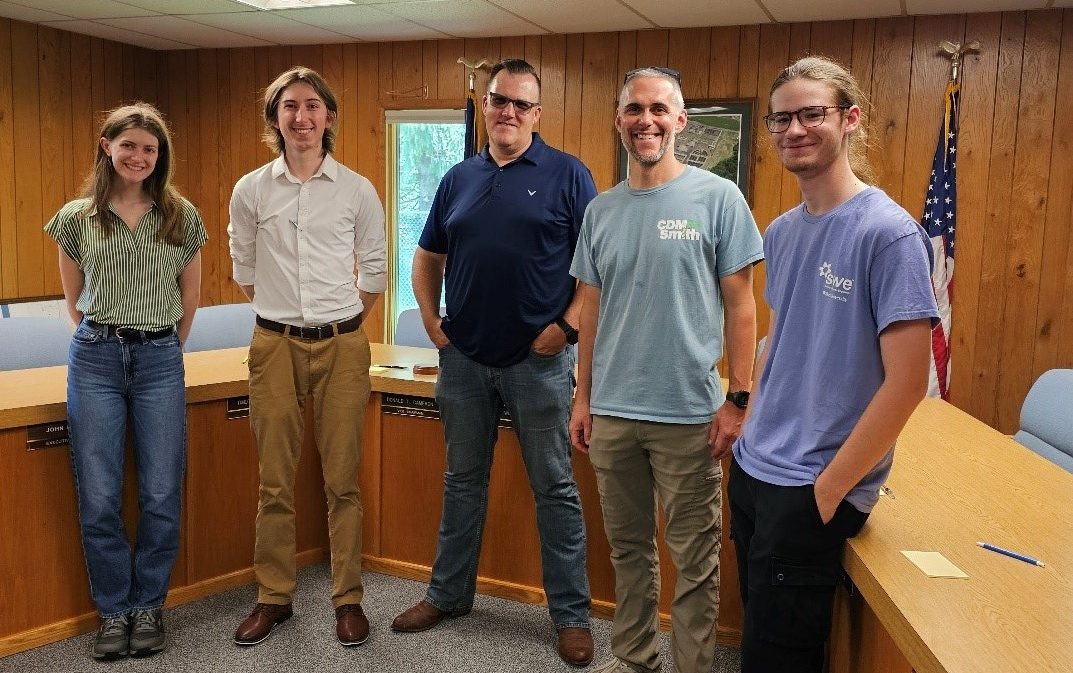
From internships to research projects, civil engineering and environmental engineering students at Wilkes University are turning real-world experience into job offers before they even receive their diplomas.
Fieldwork is a core part of the academic journey for engineering students at Wilkes. “The whole idea is it gives you a chance to see real problems that you are going to face in the field and a chance to think through some of these problems on your own, or if you are in an internship, the opportunity to work as part of a team at solving those problems,” explains Holly Frederick, professor and chair of civil and environmental engineering. “The more you get practice with seeing the challenges you will see in the field, the more prepared you are going into your career.”
Engineering students often begin gaining field experience as early as the summer after their first year through on-campus research with a professor. This gives students hands-on experience running experiments, collecting data, or conducting simulations.
Ethan Parfitt, a senior environmental engineering major from Stroudsburg, Pennsylvania, began working with Saritha Karnae, associate professor of environmental and civil engineering, in the summer after his first year to help monitor air quality in the region. His fieldwork responsibilities include setting up and maintaining air quality devices in Wilkes-Barre and surrounding cities. Parfitt has continued working with Karnae throughout his time at Wilkes and plans to continue until he graduates in May.
As students advance in their studies, many also apply their skills in research and design competitions that address real-world engineering challenges. Senior environmental engineering major Ben Campbell from Ambler, Pennsylvania, and Parfitt were both part of a student team that competed in the Water Environment Federation Technical Exhibition and Conference (WEFTEC) Student Design Competition in Chicago. The event brings together students from around the world to present solutions to real water quality issues. Their project focused on the Chalfont-New Britain Joint Sewer Authority and developing a solution to aeration issues at its wastewater treatment plant.
“This project actually prepared me for my career better than I could have ever considered,” says Campbell. “Recently, I have been hired by C.S. Davidson, an engineering firm that works on projects remarkably similar to this project, and it is safe to say that his project helped me get this job.”
Building on these experiences, many engineering students pursue internships during the summers after their sophomore and junior years. Students gain experience across a wide range of organizations, from smaller construction firms to consulting companies and state agencies such as the Pennsylvania Department of Transportation (PennDOT) and the Department of Environmental Protection.
Alena Carabetta, a senior environmental engineering student from Pittston, Pennsylvania, completed an internship with American Water last summer. She gained hands-on experience with real water infrastructure projects by shadowing project managers and engineers, visiting treatment plants and construction sites and participating in surveying, data collection and field studies.
After completing her internship, American Water was so impressed with Carabetta’s work that they offered her a job after she graduates this spring.
“It helped me become more confident in asking questions, working with a team, and understanding how different roles come together to keep projects moving,” says Carabetta. “Going into my full-time role, I feel more prepared and comfortable stepping into that environment because I’ve already experienced how the work is done day-to-day.”
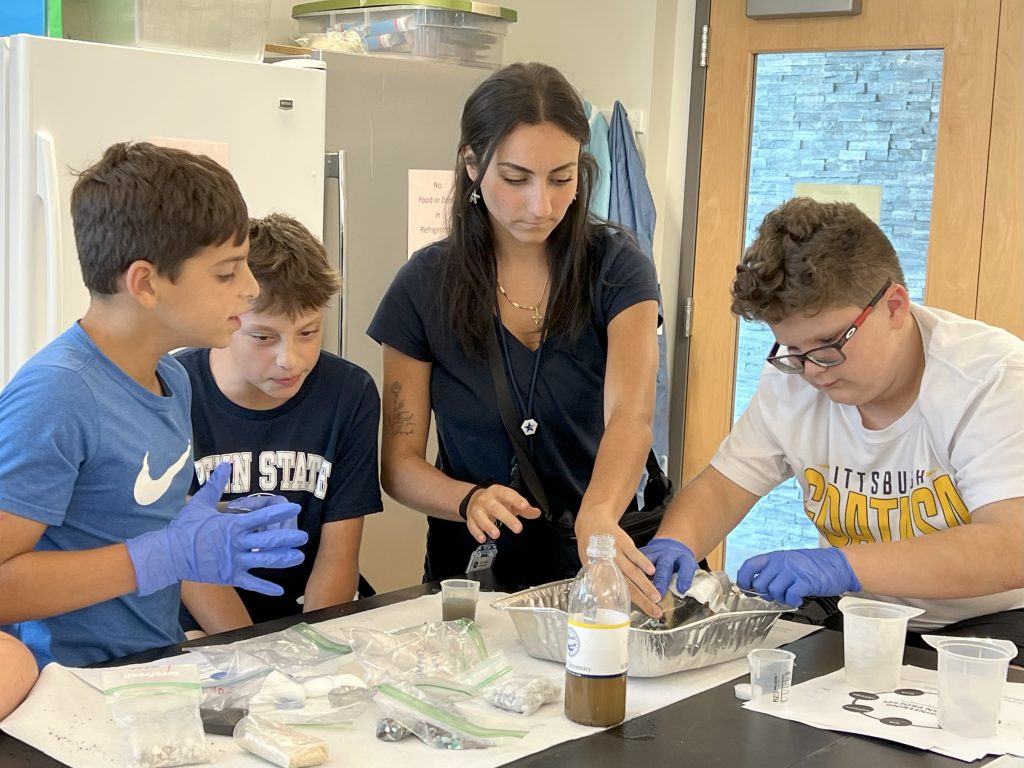
Parfitt also completed a summer internship that led to a job offer. He interned at his hometown drinking water treatment plant, the Brodhead Creek Regional Authority, where he spent much of his time in the field collecting soil samples and conducting tests to assess whether the soil conditions could cause corrosion in underground pipes. His internship was a success, and he signed a contract to continue with the authority after graduation.
Not only do internships help students develop essential communication, teamwork, and problem-solving skills in real-world settings, but they also provide a valuable opportunity to explore potential career paths. “It really is an advantage to get different kinds of internships because it gives students different kinds of experiences and helps them see where they would like to put themselves more readily in a career,” explains Frederick.
From on-campus research to internships and national competitions, these experiences are helping Wilkes engineering students turn hands-on learning into real career opportunities.