Memorial services will be held in both Putnam Center, NY and Wilkes-Barre, PA.
- Putnam United Presbyterian Church in Putnam Center, NY, on Saturday, July 18, at 11:00 AM, followed by a potluck reception. Located at 365 County Route 2, Putnam Station, NY 12861.
- First Presbyterian Church in Wilkes-Barre, PA, on Saturday, August 15, at 11:00 AM, followed by a reception. Located at 97 S. Franklin St, Wilkes-Barre, PA 18701.
- Donations in Dr. Breiseth’s memory can be made to the Christopher and Jane Breiseth Scholarship Fund at Wilkes University and the Frances Perkins Center.
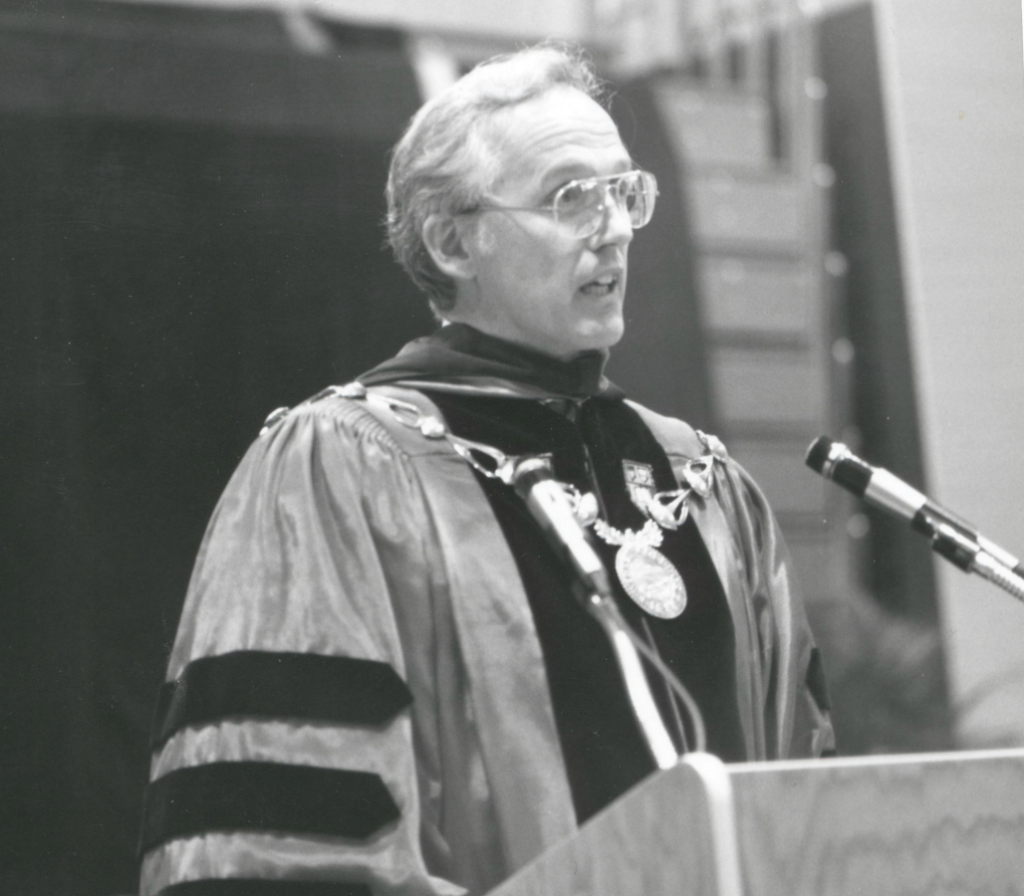
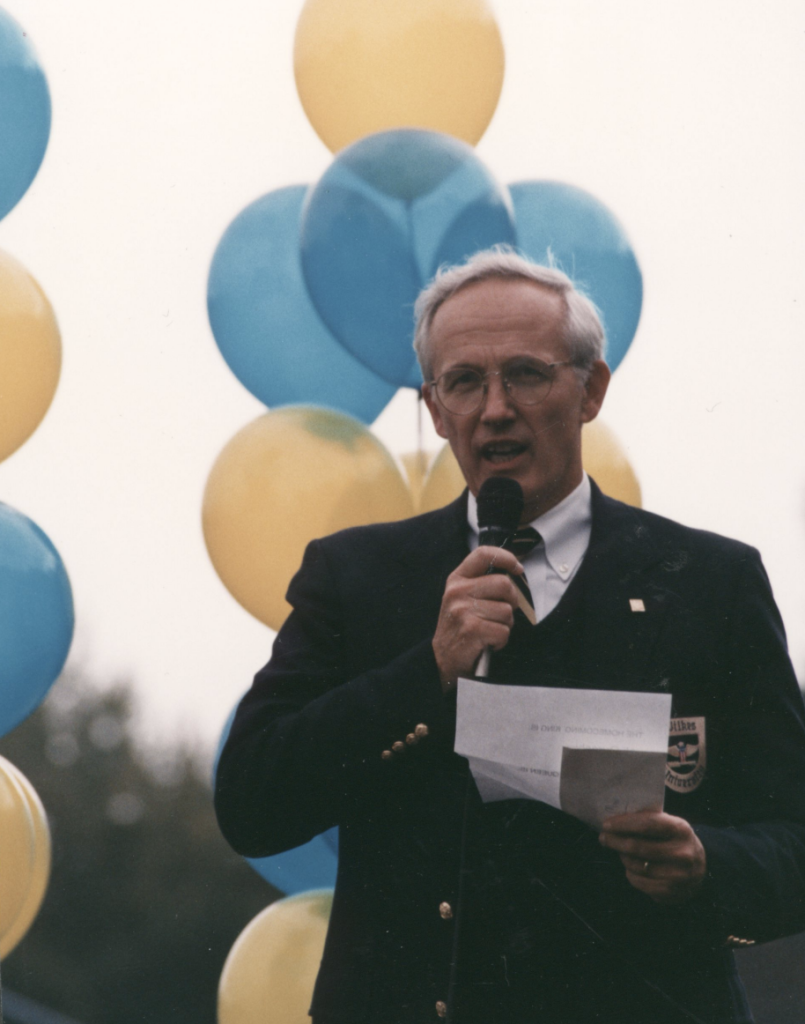
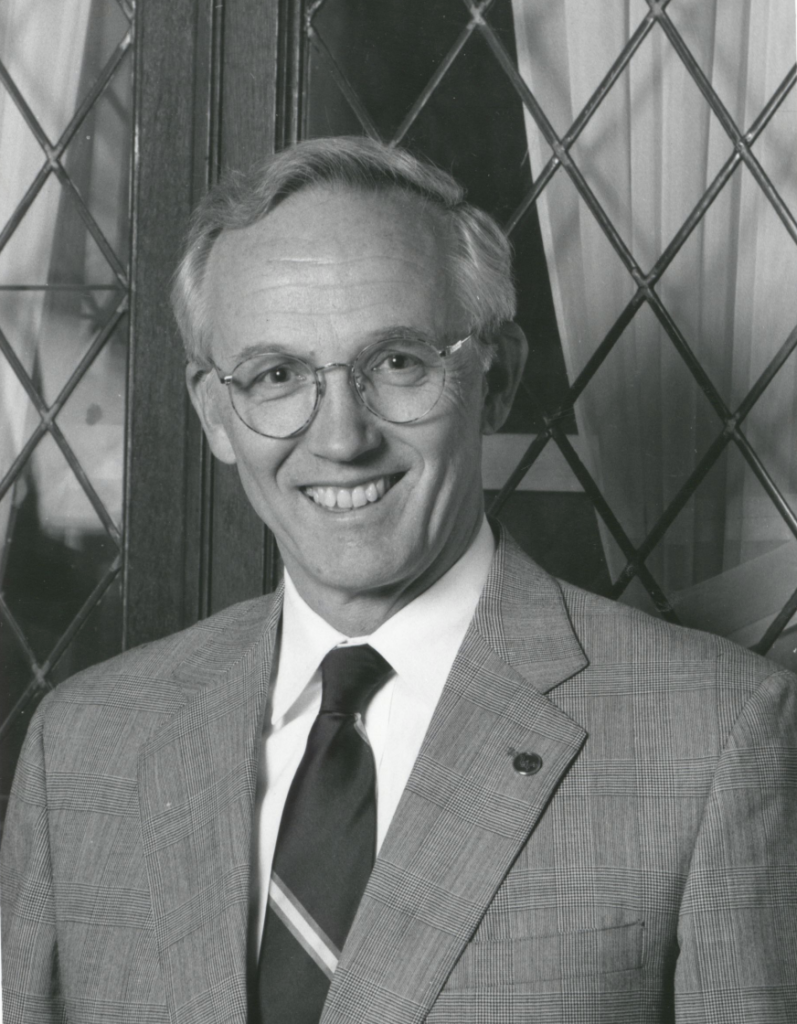
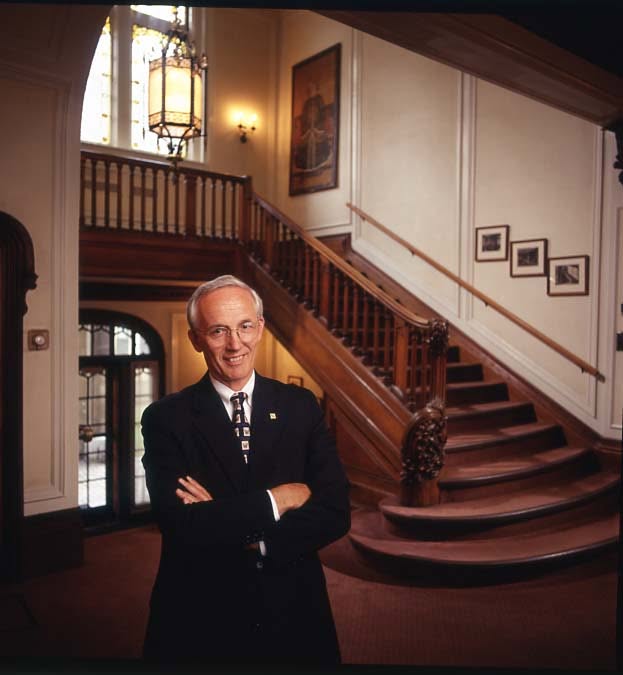
Wilkes University mourns the passing of Dr. Christopher N. Breiseth, who served as Wilkes University’s fourth president from 1984 to 2001. He died peacefully at home surrounded by family in Ticonderoga, NY, on June 27, 2026 from acute myeloid leukemia at age 89. His full obituary can be read below.
Dr. Breiseth’s leadership brought forth an era of growth and modernization, marked most notably by Wilkes’ attainment of University status in 1990. Throughout this time, Dr. Breiseth’s reverence for our institutional history ensured that we remained firmly rooted in the mission and values upon which Wilkes was built.
Dr. Breiseth began his career as an educator after earning a bachelors of arts in history from the University of California, Los Angeles (UCLA) in 1958, a bachelor of letters in modern British history from Oxford University in 1962 and a PhD from Cornell University in 1964. In 2014, Wilkes University awarded Dr. Breiseth the honorary doctor of humane letters degree. Before joining the Wilkes community as president in 1984, he served as president of Deep Springs College from 1980 to 1983.
As president of Wilkes, Dr. Breiseth oversaw far-reaching improvements in academics, student life and the campus infrastructure. In addition to Wilkes’ elevation to university status, enhancements to the curriculum burnished Wilkes’ reputation, advanced programmatic offerings and made possible the establishment of the Nesbitt School of Pharmacy at Wilkes in 1996.
Under Dr. Breiseth’s leadership, our campus evolved to meet the changing needs of Wilkes students. The Charles N. Burns Alumni Bell Tower and Carillon was built in 1985 and the Arnaud C. Marts Sports and Conference Center was constructed and opened in 1989. In 1995, the iconic John Wilkes statue would anchor the south end of the newly created Fenner Quadrangle and a new classroom and office building was constructed on South Franklin Street. This building would later be dedicated Breiseth Hall in grateful recognition of Dr. Breiseth’s 17 years of service as president. In 1999, based on Dr. Breiseth’s vision, the University finished construction and opened the Frank and Dorthea Henry Student Center as a vibrant hub for student life on campus.
In an announcement to the Wilkes community, Bill Miller ’81 said, “Dr. Breiseth served as an inspiring mentor and friend to an entire generation of Wilkes students, including myself. In fact, it was he who encouraged me to join the Board of Trustees nearly 30 years ago. Like so many members of our campus community, I will be forever grateful to have benefited from his leadership, insight and kindness.”
After his tenure at Wilkes, Dr. Breiseth served as the president of the Franklin and Eleanor Roosevelt Institute in Hyde Park, NY, served as the chair of the board for the Frances Perkins Center and dedicated his time to numerous community and civic organizations. Until a few years ago, Dr. Breiseth maintained an apartment in the Frederick Stegmaier Mansion on South Franklin Street and was a faithful attendee of the Max Rosenn Lecture Series in Law and Humanities and annual Founders Gala. Together with past presidents Dr. Francis Michelini, Dr. Tim Gilmour, Dr. Bob Capin and Dr. Paul Adams, Dr. Breiseth worked diligently on an oral history project that has provided the Dr. Harold Cox Archives at Wilkes with more than 50 interviews with notable members of the campus community.
Dr. Breiseth was predeceased by his wife of 48 years, Jane Morhouse Breiseth, for whom the concourse on the first floor of Breiseth Hall is named.
Christopher N. Breiseth Obituary
Dr. Christopher Neri Breiseth, 89, historian, professor, CEO, and college president, died peacefully at home surrounded by family in Ticonderoga, NY, on June 27, 2026 from acute myeloid leukemia. He was born in Minneapolis on October 6, 1936, to Joyce Porter Breiseth and Norton Millard Breiseth, who raised five children in a civically-minded family.
The family moved to Los Angeles after World War II and Dr. Breiseth graduated from Alexander Hamilton High School in 1954, where he served as student body president, and from UCLA in 1958 with a B.A. degree in History with Highest Honors. Seminal youthful experiences were his work on Adlai Stevenson’s presidential campaigns in 1952 and 1956 and a 1957 trip he took to India through the Project India initiative, a forerunner of the Peace Corps. He was almost prevented from participating in Project India due to a comment of protest he added to a loyalty oath he was required to sign as part of a mandatory AFROTC course. He earned a B. Litt degree in Modern British History at Oxford University in 1962 and a doctorate in Modern European Intellectual History at Cornell University in 1964.
As a graduate student at Cornell, Dr. Breiseth lived at Telluride House and served as President of the Telluride Association from 1965 until 1967. During his time at Telluride House, several notable guests, including Frances Perkins (Franklin Delano Roosevelt’s Secretary of Labor) lived with the students. Following Ms. Perkins’s death, he wrote an essay titled “The Frances Perkins I Knew.” Telluride was also the place where he met his future wife of 48 years, Jane Morhouse of Ticonderoga, NY, with whom he had three daughters and shared a vibrant, service-oriented life. As empathetic and enthusiastic communicators and connectors, they hosted friends, visitors, and unforgettable dinner parties in each place they lived.
Dr. Breiseth began his teaching career at Williams College in 1963. After a leave of absence from Williams to work in Lyndon Johnson’s War on Poverty at the Office of Economic Opportunity in Washington, D.C. from 1967 to 1969, he changed his scholarly focus to American multiracial democracy. He received a Danforth Post-Doctoral Fellowship in Black Studies at the University of Chicago in 1970 with historian Dr. John Hope Franklin, who would become a lifelong friend and mentor. Dr. Franklin recommended him as a faculty member for the new Sangamon State University campus in Springfield, Illinois — the Land of Lincoln.
Surrounded by Lincoln’s legacy, Dr. Breiseth continued to develop his interests in presidential history and race relations, helping to instigate a successful effort to desegregate Springfield schools and reform public school culture in the mid-1970’s. It was the first Northern desegregation case following the civil rights era.
Dr. Breiseth served as the President of Deep Springs College in the High Sierras of California from 1980-83, and then as President of Wilkes University in Wilkes-Barre, PA, from 1984-2001. At Wilkes, he oversaw the reorganization and expansion of academic programs, the addition of a Doctor of Pharmacy program, the construction and renovation of several new buildings and iconic additions to the campus such as the Fenner Quadrangle and the John Wilkes Statue, the enrichment of student engagement initiatives, and the transition from college to university.
As a civic leader in Wilkes-Barre, he was involved with several community and interfaith organizations, collaborated with other local institutions of higher education, and chaired both the Pennsylvania Council for the Humanities and the Earth Conservancy, an environmental reclamation project on mine-scarred land led by Congressman Paul E. Kanjorski.
Following his retirement from Wilkes University, Dr. Breiseth served as President of the Franklin and Eleanor Roosevelt Institute in Hyde Park, NY, an organization dedicated to preserving the Roosevelt legacy. This opportunity, along with journalist Kirstin Downey’s discovery of his essay about Frances Perkins, ushered in a role that he seemed destined to play: steward and champion of the New Deal. He was involved in several organizations devoted to protecting the legacy of the New Deal, including the National New Deal Preservation Association in Santa Fe, NM, and the Frances Perkins Center in Newcastle, ME, where he served as a board member and board chair over a period of several years. He was also an active participant in an informal weekly policy “think tank” meeting among a group of grandchildren of New Dealers, including June Hopkins, James Roosevelt, Scott Wallace, and Tomlin Perkins Coggeshall, Frances Perkins’s grandson.
He and Mrs. Breiseth moved to her family home in Ticonderoga, NY, in 2009. Following his wife’s death in 2012, Dr. Breiseth remained active in retirement in the Kiwanis Club, Torch Club, Ticonderoga Heritage Museum, Ticonderoga Historical Society, and activities related to Fort Ticonderoga. He participated in the Kiwanis food backpack program to combat local child hunger. He also stayed close to the Wilkes community, spearheading a project to conduct oral history interviews with Wilkes alumni, faculty, and trustees. Through this project, he pulled four past presidents together, including Dr. Francis “Mike” Michelini, Dr. Bob Capin, Dr. Paul Adams, and Dr. Joseph “Tim” Gilmour, to collaborate with him on the effort, partnerships which enriched the undertaking and also led to the formation of lasting friendships.
Dr. Breiseth will be remembered as a father figure, mentor, and source of wise counsel to innumerable students, colleagues, friends, and family members whose joys, sorrows, and dreams he shared over the years. He put relationships above personal interests and was his family’s biggest cheerleader. He had a savant-like memory for people and provided invaluable memories for family stories and oral history projects. As a teacher and friend, he helped many people in his orbit dig more deeply into their own personal stories. He also enjoyed numerous moments of serendipity that he called “small world stories” over his lifetime that often opened new doors for him and others. In his last year, even as his energy declined, he welcomed a steady stream of visitors and calls, with his vigor replenished rather than drained by continual emotional and intellectual substantive connection. He also accomplished the goal he identified when he received his leukemia diagnosis: to finish his memoir.
Working hard alongside his family and a dedicated publishing team for several months, he published his memoir in May 2026 and enjoyed a book signing organized by his friends and neighbors just three weeks before his death. The memoir is titled THE EDUCATION OF CHRIS BREISETH: A Life of Service to Secure Our Multiracial Democracy Inspired by Lincoln, FDR, and Frances Perkins.
During his final days, Dr. Breiseth continued working and engaging with others with a sense of purpose (and humor). He voted with gusto in the New York State primary just five days before his death. He was humbled and overwhelmed by the outpouring of love and care he received over the course of his illness, particularly from his neighbors and the nurses at the Ticonderoga Outpatient Clinic, whose patient he had been for several years.
Dr. Breiseth is pre-deceased by his wife Jane, parents, sister Nan Bentley, and brother Jeff. He is survived by his daughters Abigail; Erika and her husband William F. Brockman, of Baltimore, MD; and Lydia and her husband Marco Vargas, of Arlington, VA; grandchildren Warner and Annika Brockman and Koralie Vargas; brothers Alan and Greg Breiseth; and many cherished nieces and nephews.
A memorial service will be held at Putnam United Presbyterian Church in Putnam Center, NY, on Saturday, July 18, at 11:00 AM, followed by a potluck reception. A service will also be held at First Presbyterian Church in Wilkes-Barre, PA, on Saturday, August 15, at 11:00 AM, followed by a reception.
Donations in Dr. Breiseth’s memory can be made to the Christopher and Jane Breiseth Scholarship Fund at Wilkes University and the Frances Perkins Center. Several of his talks, articles, and books are preserved on a website created by his family to sustain his legacy, www.christopherbreiseth.com.