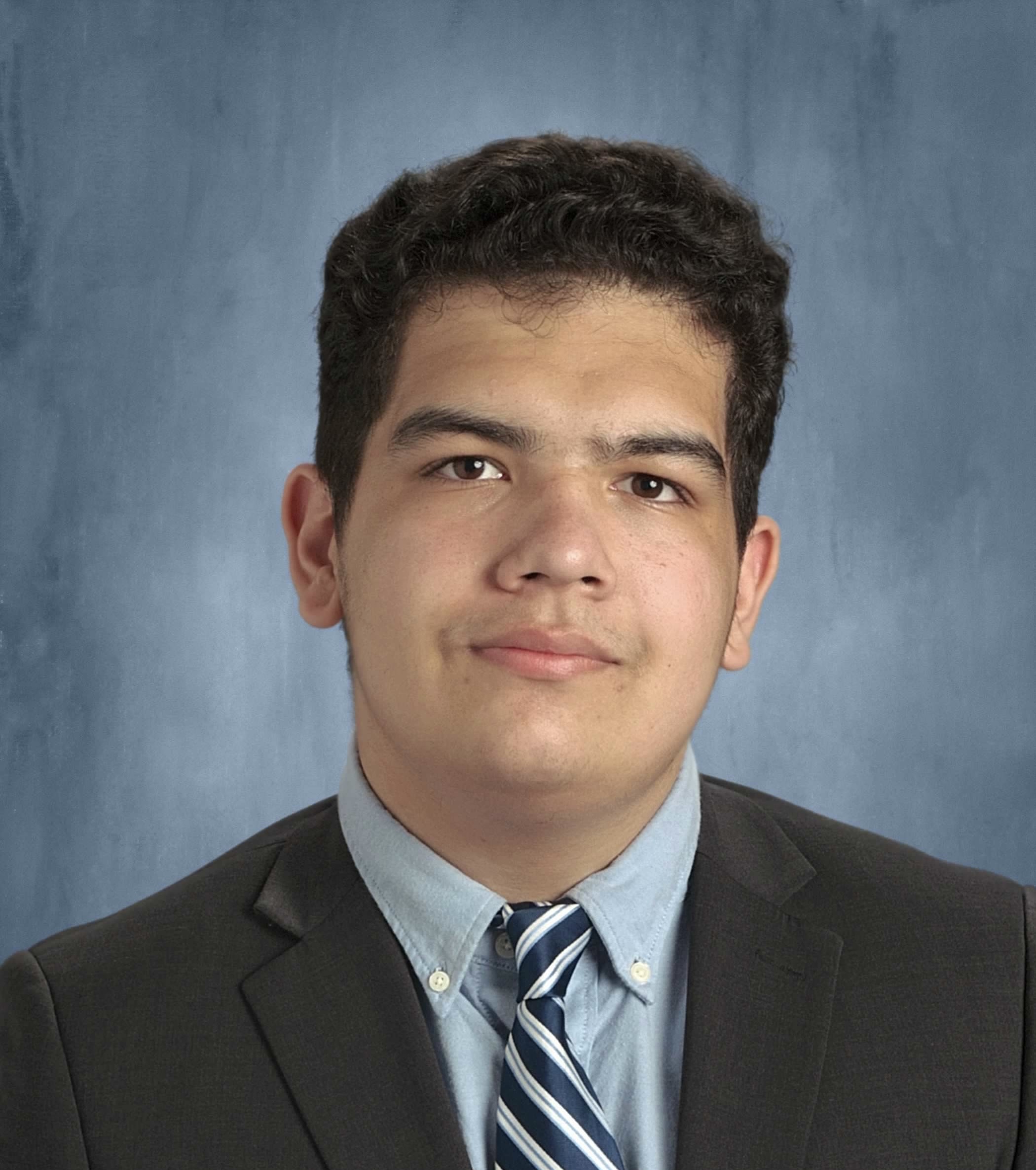
Kasra Paknezhad is chasing his dream to build meaningful connections and bridge the gap in healthcare as he pursues a career in medicine
Twelve years ago, Kasra Paknezhad and his family moved from Iran to America. Paknezhad’s mother was a physician and retired to take care of him and his younger brother. His father earned his medical degree in Iran, and after moving to the United States, he successfully completed the USMLE examinations and fulfilled the required licensing requirements to practice medicine in the U.S.
“They [his parents] wanted to give us an American dream, a better life,” says Paknezhad. He is determined to turn the dream into a reality through the work ethic and determination he inherited from them.
A major in biology and minor in chemistry, Paknezhad’s goal is to become a primary care physician. The junior from Mountain Top, Pennsylvania, was accepted into the Pre-medical Early Assurance Program with Penn State College of Medicine.
“Once I interviewed with Penn State College of Medicine [through the early assurance program], I knew I was committing to Wilkes,” says Paknezhad. He called his family as soon as he was accepted into the program. “My dad was cheering, and my brother was so happy,” he says.
Paknezhad did research at Wilkes before he even enrolled. He joined a few other students to work with Linda Gutierrez, professor of biology. Paknezhad began his research into the effects of carob supplementation, discovering that combinations with a Western diet prevent and reverse obesity while reducing leukocytic infiltration in mice.
His path in medicine became clearer after shadowing his PCP. “I saw how they cared and interacted with their patients, and the connection they had with them. That is what drove me to be a primary care physician with a pediatric and geriatric focus,” says Paknezhad. “It was fate at that point.”
When not on campus, Paknezhad can be found at Geisinger Wyoming Valley Medical Center. He began volunteering there four years ago and has put in over 1,000 hours of community service. He helps with caring carts, general patient engagement and special projects. He also works with HELP– the Hospital Elder Life Program, designed to help maintain cognition in geriatric patients to prevent delirium.
“I show patients cards to see if they can recall the numbers, sit and talk with them or go on walks. Most of them struggle with hospital stays, and I help them to acclimate to their accommodations,” says Paknezhad. “I also help the nurses by alleviating some of the duties.”
Dedication and commitment are never in short supply with Paknezhad. “I have never missed a day of school,” he says, and adds with a chuckle, “FOMO [fear of missing out].” It can, however, take its toll, and Paknezhad has learned that while he is passionate about helping others to feel better, he must also apply that to himself. He shared his personal struggles with his health, academic pressures and identity, and how they have impacted him as a student.
“I thought it was frowned upon to seek help because I was technically an adult and I should have known better. I put that pressure on myself,” he says.
He has since embraced the fact that he never has to be alone in his struggles. His remedy? “Reach out to people,” Paknezhad says. “That’s when therapy came in, and I could talk about it and work out those issues with who I really am, and I surround myself with reminders of who I am.”
These reminders include bracelets he wears every day, wearing his favorite color pink to recognize some of his family members who have battled cancer, a necklace that symbolizes his own health challenges growing up and a watch he wears on certain Fridays, given to him by his brother — his best friend.
“I wear it [the watch] on the Fridays when my family goes to visit him at school in Pittsburgh, and I have to stay behind in Wilkes-Barre to focus on my commitments,” he says. “My brother and I share a deep passion for medicine and a drive to make it there together, so when I stay behind to stay dedicated to my studies, this watch makes me feel like I’m right there on the trip with my family.”
Paknezhad knows he can utilize the University’s counseling center services, available to all students, if he ever needs them. Mainly, he relies on the network he has built at Wilkes, including his friends and valued faculty mentors, like Gutierrez, “who is always there” for him when he needs help. “Charismatic mentor” Jeff Stratford, professor and chair of biology, has helped him to take part in beneficial programs, such as Primary Care Week at Penn State University. He especially credits Debra Chapman ‘81, MS ‘84, former faculty of practice in the Biology Department and founder of WEBS, for her support. She helped Paknezhad develop resilience and perseverance and encouraged him not to focus so much on perfection.
“I used to give up on things if I didn’t get them right immediately,” Paknezhad says. “But she taught me to keep trying and stop second-guessing myself. She was always there for me.”
Chapman believes in Paknezhad and the positive ripple effect he has made – not only on campus, but in the community.
“Kasra has become an important part of our Biology Department. Pursuing a career in medicine, he is incredibly driven and productive — a man with many talents — and it has been a pleasure to watch him grow. His genuine curiosity, strong work ethic and commitment to both his studies and our campus and local community set him apart,” says Chapman. “I am proud of all he has accomplished and look forward to seeing the impact he will make in the future.”
Paknezhad continues to define success for himself, combining the American dream his parents have for him and his brother with the dream he builds for himself. After he graduates, he plans to pursue medical school at Penn State College of Medicine to study rural health and specialize in pediatric and geriatric medicine.
“I want to build real connections with my patients and care for families across generations,” says Paknezhad. “If I can’t treat someone directly, I want to have a strong network of physicians to ensure they still get the best possible fit. Ultimately, my goal is to bridge the gaps in healthcare and deliver the highest quality of care.”