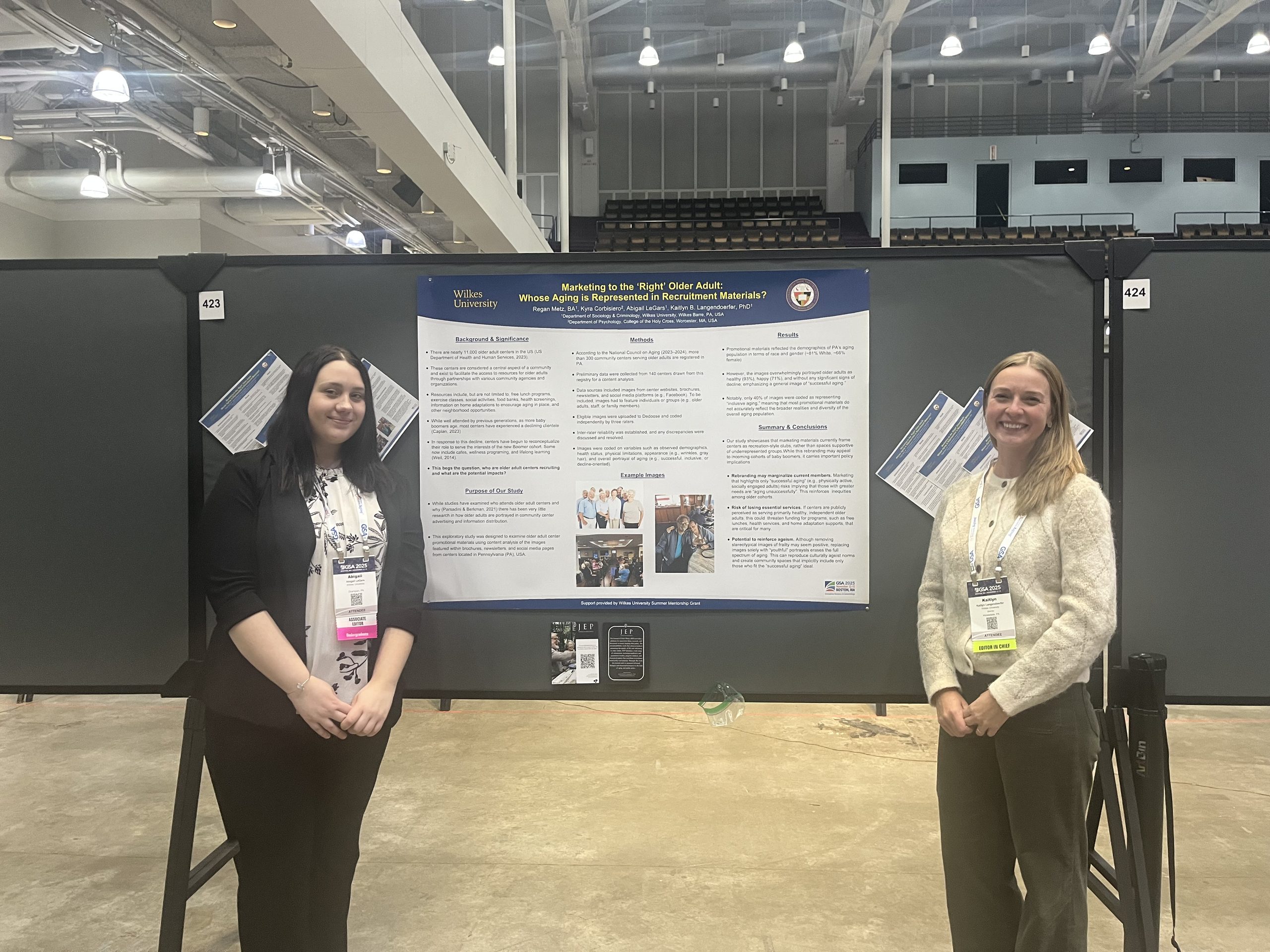
For the past three years, Wilkes University sociology and criminology students have had their research accepted for presentation at national conferences. For students like Abby LeGars ’26 and Sydney Ruskey ’26, these opportunities have been more than a chance to showcase their research. These experiences have helped them build confidence, network with professionals in the field and connect their experiences at Wilkes to what comes next.
“While all students in our sociology and criminology program complete term papers and senior capstone projects, not all of them continue to think about their work once it’s completed and graded,” says Kaitlyn Langendoerfer, assistant professor of sociology and criminology. “The students who have presented at national conferences over the past three years have expressed an interest in taking their papers or capstone projects further. Many are also considering graduate school, so these conferences are a great opportunity for them to gain experience presenting their research in an academic setting.”
For LeGars, a sociology and criminology double major from Grampian, Pennsylvania, the opportunity to present at a national conference grew out of summer research she conducted with Langendoerfer. Together, they examined how aging is represented in recruitment materials for community centers serving older adults. Looking at more than 60 community centers across Pennsylvania, they considered how these portrayals may shape public perceptions of aging and influence how resources are allocated to these centers.
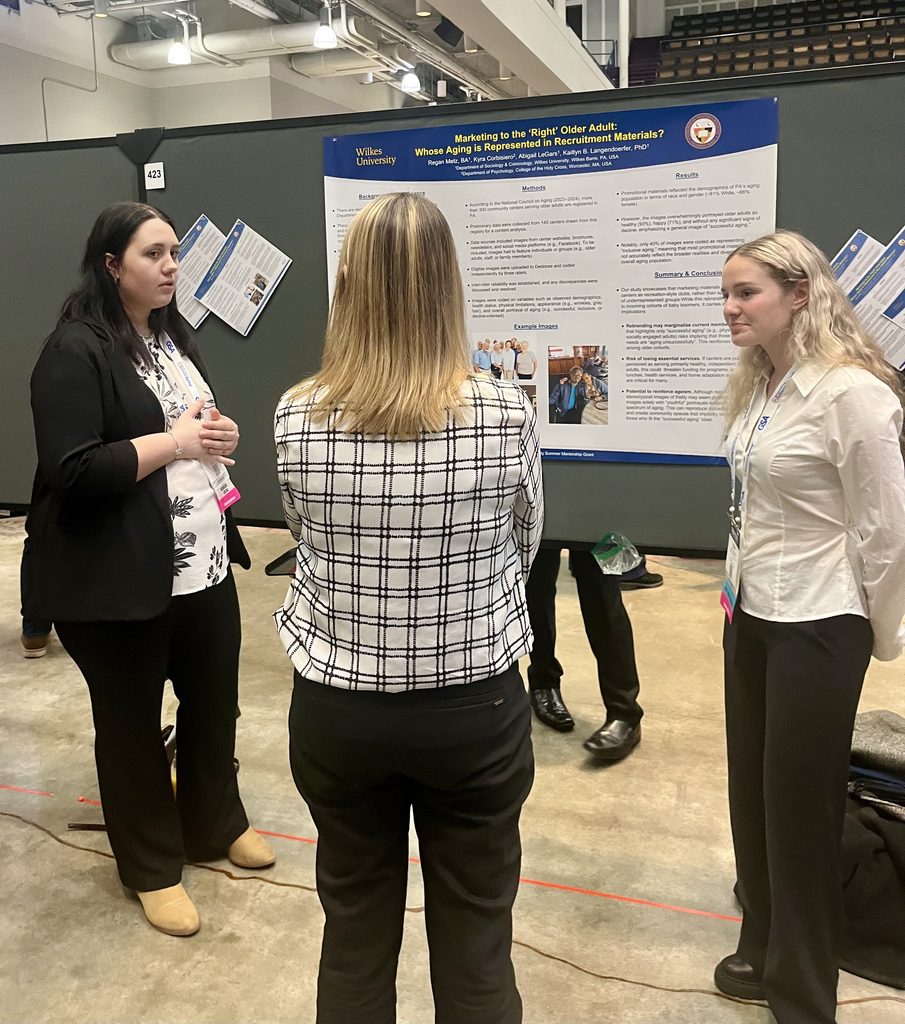
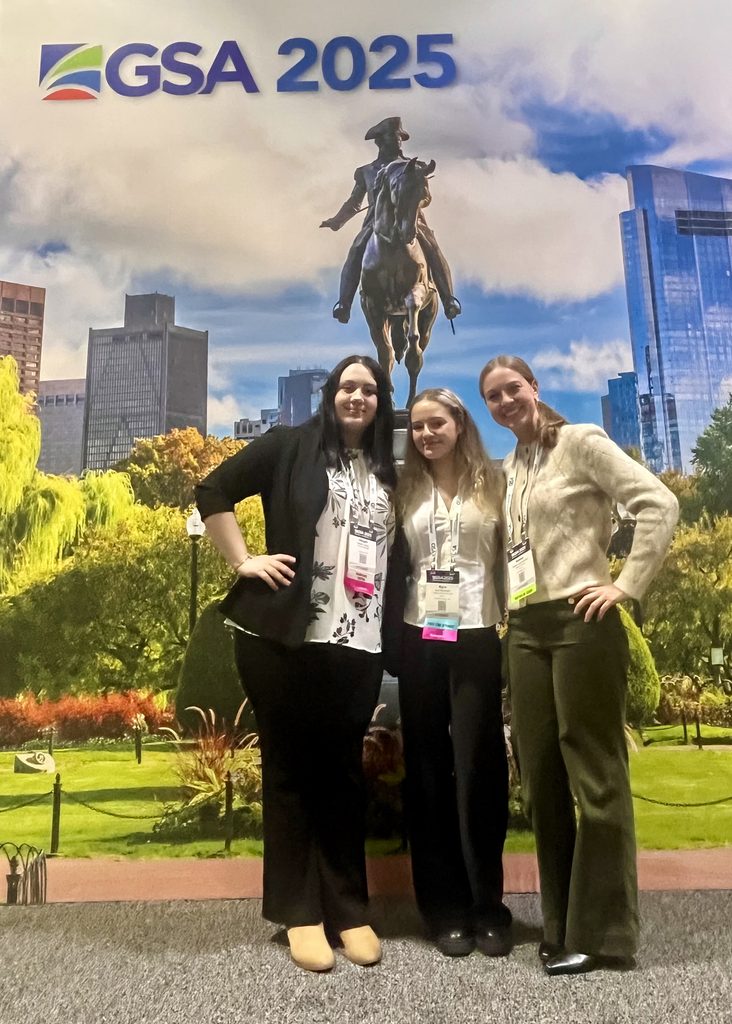
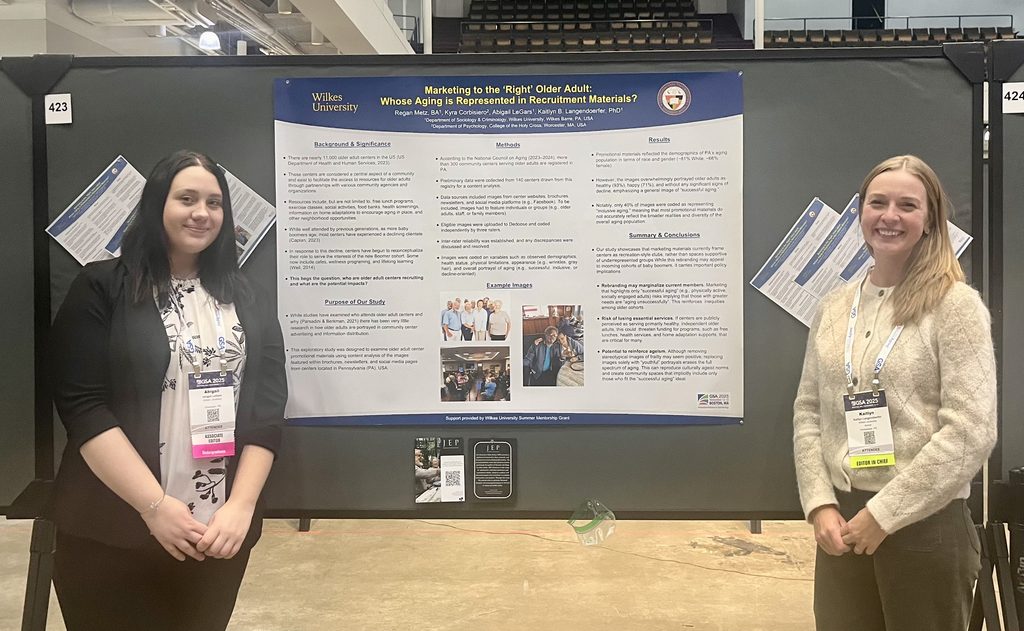
LeGars and Langendoerfer presented their research at the Gerontological Society of America Annual Meeting in Boston.
LeGars’ work with Langendoerfer didn’t stop there. Langendoerfer also invited LeGars to take on the role of managing editor for the Journal of Elder Policy, where Langendoerfer serves as editor-in-chief. In this role, LeGars assisted with the daily operations of the journal, including finding reviewers to peer review articles and reviewing manuscript proofs.
“This is not a typical job for an undergraduate student, and I was lucky to have the opportunity,” says LeGars. “It has shaped my academic path in ways I never could have imagined.”
Since graduating this past spring, LeGars has started law school at Widener University. She credits the experiences she had at Wilkes, both inside and outside of the classroom, with shaping her path and confirming her decision to pursue law.
“My preparation for law school truly began with my experiences I had at Wilkes, especially within my majors,” says LeGars. “As a criminology and sociology student, I was already learning how policy affects real people.”
For Ruskey, a sociology major from West Wyoming, Pennsylvania, what started as her senior capstone project turned into a chance to present her work at the Society for the Study of Social Problems (SSSP) conference in New York City.
“Dr. Langendoerfer introduced me to the SSSP conferences and suggested I try submitting my paper, which I did and luckily got accepted,” says Ruskey.
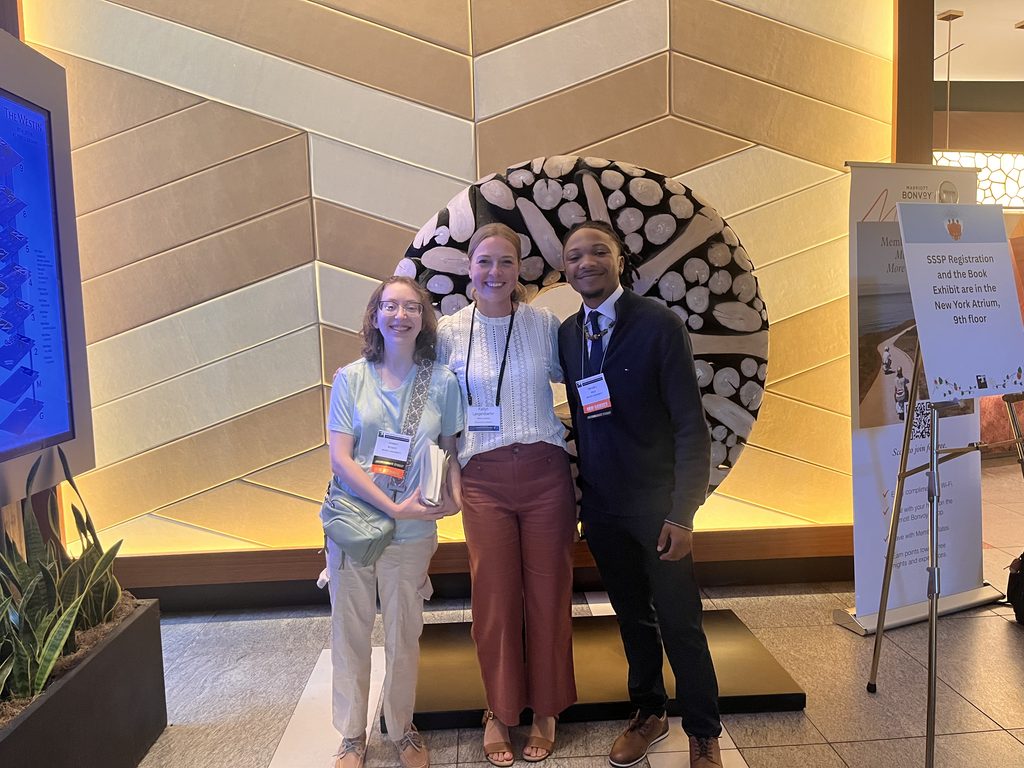
Ruskey’s research examined the relationship between different types of disabilities, college success and educational aspirations. Her research explored the inequalities people with mental and physical disabilities face in terms of housing, finances, mental health, health care and education. She also explored how improving access to and completion of higher education could help improve individual outcomes for people with disabilities while also benefiting the broader academic community.
“My presentation at SSSP was very fun,” says Ruskey. “I was pretty nervous about it, but I had a critical dialogue session, which meant a few different people discussed a basic summary of their research, and then we all discussed each other’s research together. It was a pretty small group, so it was easy to get an opportunity to talk and really feel like we got into the details of each other’s research.”
After graduation, Ruskey landed a job as a blended case manager at Robinson Counseling Center. In her role, she helps adults experiencing mental health challenges navigate difficulties in their lives by connecting them with resources that can help them work toward greater independence and fulfillment.
Ruskey plans to stay in her current role for the foreseeable future, but may be interested in pursuing a master’s degree or Ph.D. in sociology in the future, with an interest in social psychology or medical/disability sociology.
Getting to a national conference is not a process students have to navigate on their own. Faculty members at Wilkes work closely with students from initial submission through the conference itself, helping them refine their papers and abstracts and prepare presentations that effectively communicate their research. It’s one of the many reasons why students choose Wilkes to further their personal and professional goals.
“Our students are often the only undergraduates in attendance, with most other attendees being professors, researchers, postdocs and graduate students. It’s a great opportunity for students to see themselves as part of that larger academic community,” says Langendoerfer.
For students interested in presenting their research, financial support is available to make conference participation possible. Students can apply for a Student Travel Grant to help cover conference and travel expenses. Wilkes also offers the Summer Mentoring Program which provides funding for students who work with faculty on research over the summer. In some cases, faculty members may also have funding through their own independent research or departmental funds.
“Our students are not just learning about sociology and criminology in the classroom; they are actively engaging with the discipline,” says Langendoerfer. “These experiences help students see the possibilities available to them after Wilkes. They leave our programs with skills, experiences and professional connections that can serve them well whether they continue on to graduate school or begin their careers.”