Wilkes University has received two grants, totaling more than $1.2 million, from the National Science Foundation (NSF) to support innovation and workforce development within the region.
“This is a tremendous achievement for our faculty as well as the greater community,” said President Greg Cant, noting the competitive nature of NSF grants and the rigorous process proposals go through before selection. Funding is awarded only to proposals with exceptional intellectual and societal promise. For example, in fiscal year 2023, the NSF evaluated more than 38,000 competitive proposals with only 29% receiving funding. “These nationally-sought grant awards demonstrate the transformative research and engagement happening on our campus. It is an honor to be recognized for our academic excellence, passion for innovation and our commitment to collaboration across disciplines.”
The two projects, titled “Experiential Learning for Artificial Intelligence-Driven Robotics in Northeast Pennsylvania (EXPLOR-NEPA)” and “Building Relationships in Innovation and Development for Growth in Emerging Technologies (BRIDGE-TECH)” are designed to position Wilkes as a community asset to address critical technology needs. Both include initiatives focused on delivering technology education, facilitating academic and industry partnerships, connecting subject matter experts and encouraging innovation across the region.
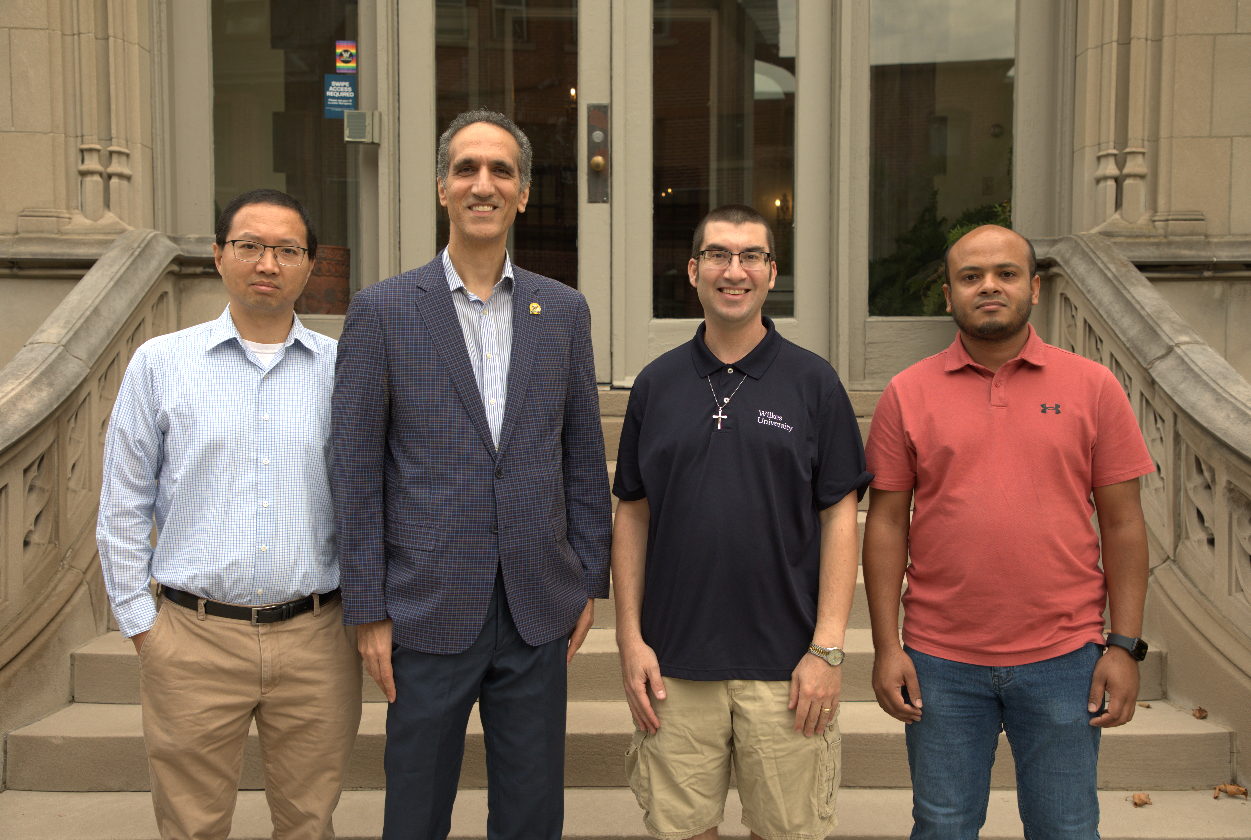
Abas Sabouni, professor of mechanical engineering and chair of the mechanical and electrical engineering department, served as a principal investigator on both projects. Sabouni noted the proposal process was an “intensive but rewarding experience” as collaborators partnered to deliver not only comprehensive proposals but programs that open doors for future shared involvement, teamwork and lasting impact. “The long-term impact will be a sustainable model for connecting education, innovation and industry in the northeastern Pennsylvania region and beyond,” said Sabouni.
About EXPLOR-NEPA
EXPLOR-NEPA is a three-year experiential learning initiative funded by the NSF’s Experiential Learning for Emerging and Novel Technologies (ExLENT) program. The initiative was developed by Sabouni alongside Edward Bednarz III, professor of mechanical engineering, Asif Khan, assistant professor of electrical engineering, and Yong Zhu, associate professor of mechanical engineering.
The idea for EXPLOR-NEPA grew from Wilkes’ longstanding commitment to experiential learning and regional workforce development. Wilkes emphasizes mentorship alongside hands-on experiences both in and out of the classroom across disciplines. From research and internships, to cooperative education and community service, there are countless opportunities for Wilkes students to develop their skills while becoming well-rounded individuals well-prepared for their futures.
Ongoing collaboration with local school districts and industry partners revealed to faculty members a growing need for greater access to hands-on technology experience. “We identified an urgent need to introduce artificial intelligence and robotics concepts earlier in the educational pipeline and to expand access for students from underrepresented and underserved backgrounds,” said Sabouni.
Led by Wilkes University in partnership with Production Systems Automation and local high schools, BRIDGE-TEACH will provide area high school students early exposure to AI-driven robotics and automation through structured hands-on learning, mentorship and dual enrollment opportunities to earn college credit.
“We hope to expand the program to additional school districts, integrate new technologies such as autonomous drones and smart manufacturing systems, and continue refining our experiential learning framework to meet the demands of a rapidly changing world,” said Sabouni.
About BRIDGE-TECH
Universities play a vital role in regional innovation ecosystems. To address shared challenges around resources, expertise and connection with industry partners, institutions may be empowered to work together. BRIDGE-TECH is one such example.
Funded by the NSF’s Enabling Partnerships to Increase Innovation Capacity (EPIIC) program, BRIDGE-TECH will focus on building sustainable innovation ecosystems for emerging technology by facilitating greater industry-academia collaboration. The project is led by Sabouni and associate vice president of finance, Therese Kurilla.
Through BRIDGE-TECH, Wilkes will collaborate with Penn State Harrisburg, University of New Haven, Bradley University and Widener University to share research and encourage industry partnerships that can support both university and regional economic goals. Wilkes’ contribution centers on the establishment of the Synergistic Opportunities for Academic Research (SOAR) Center, which will serve as a hub for managing and expanding partnerships with industry, government and community organizations.
“The SOAR Center will strengthen innovation capacity at Wilkes by creating a centralized database of faculty expertise, facilitating collaboration with regional and national partners, and supporting faculty development in grant writing, technology transfer and entrepreneurship,” said Sabouni, noting that initiatives like SOAR are important tools to strengthen the connection between academia and industry.
Through the consortium of universities involved, industry partners in fields such as logistics and transportation, biomedical engineering, agriculture and education can take advantage of a shared network of facilities and expertise. Students and faculty may work together on projects through academic-industry partnerships, building valuable experience while leading to outcomes that can ultimately impact the economic success of the region.
“Over time, this project will help establish Wilkes University as a model for how primarily undergraduate institutions can cultivate sustainable innovation ecosystems—empowering faculty, students, and communities to contribute meaningfully to national technological and economic advancement,” said Sabouni.
Together, EXPLOR-NEPA and BRIDGE-TECH introduce vital resources to northeastern Pennsylvania to prepare the next generation of students to succeed while encouraging greater economic impact within the region. They also serve as an active demonstration of the university’s academic excellence.
This is not the first time Wilkes has been successful in obtaining NSF grant funds:
- In 2019, the university received nearly $500,000 from the NSF to acquire a high-performance computer cluster to support student-faculty research across science, engineering and mathematics disciplines. WARLOC, or the Wilkes Accelerated Research Learning and Outreach Cluster, is the most powerful academic computing resource in northeastern Pennsylvania.
- In 2021, Wilkes received a portion of a $1.1 million collaborative grant from the NSF to study the effects of climate change on plants with students receiving the opportunity to travel to the Arctic to conduct research in collaboration with Ned Fetcher, coordinator of the Institute for Environmental Science and Sustainability.
- In 2024, Wilkes was awarded $200,000 to establish the antenna measurement laboratory, another project led by Sabouni, within the Mark Engineering Center.
- Earlier this year, $115,000 of NSF grant funding was also awarded to Holly Frederick, professor and chair of the civil and environmental engineering department, to acquire an ion chromatograph for the Cohen Science Center.
“[These additional awards] represent a major milestone for Wilkes University and stand as a testament to our collective commitment to innovation, experiential learning and workforce development,” said Sabouni.