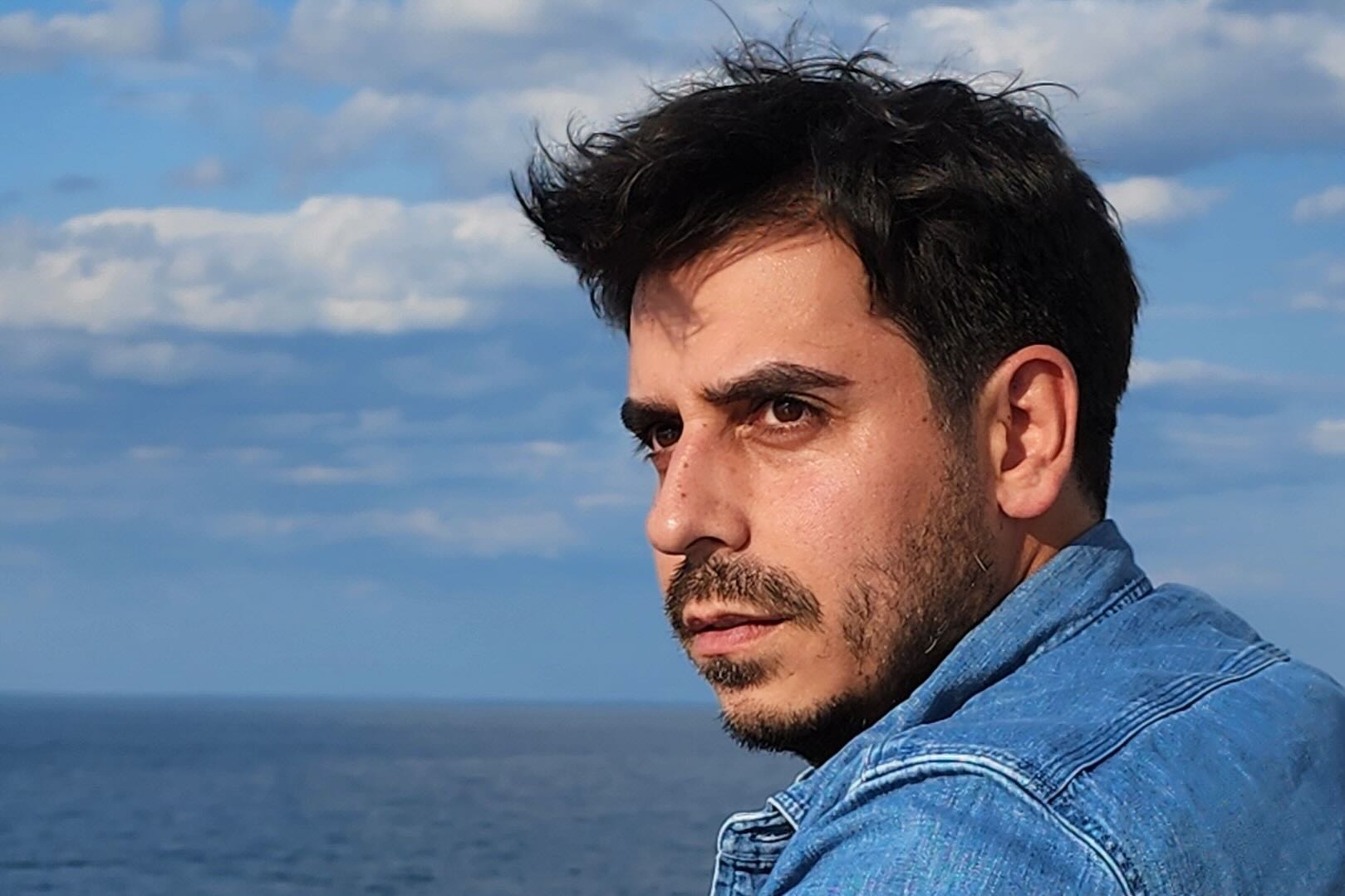
Bobak (Bobby) Karimi, associate professor of geology, has been selected to deliver Wilkes University’s Paul A. O’Hop Final Word Lecture. The lecture, “From Tragedy to Transformation: Imaging the Invisible to Rebuild the Wyoming Valley,” will take place at 6 p.m. on Wednesday, April 8, in the Jean and Paul Adams Commons on the second floor of the Henry Student Center. The presentation is free and open to the public.
In Karimi’s lecture, he will explore how modern geophysical techniques are used to investigate the hidden legacy of anthracite mining beneath northeastern Pennsylvania. His work draws on regional events including ongoing mine subsidence hazards and the Knox Mine Disaster. Karimi will highlight how he and his student research team used gravity surveys, electrical resistivity tomography and other subsurface imaging methods to detect underground voids, map hidden water pathways and guide restoration efforts in partnership with local organizations and state agencies. This work demonstrates how place-based scientific research can help reduce risk, support environmental restoration and transform a historic landscape of extraction into one focused on resilience and renewal.
Before Karimi digs in at the O’Hop Lecture, learn more about his work with students, the why behind his research and his rockin’ role at field camp.
Where is home for you?
Home is currently in Dallas, Pennsylvania. I’ve moved a lot, so there is no single geographic location I identify as “home.” Conceptually, home is somewhere in nature surrounded by rocks (and plants and animals if they HAVE to be there).
What’s your favorite class to teach?
This is a really tough one. I think my favorite class to teach at this time is probably Applied Geophysics. In this course we learn about non-invasive ways to look into the subsurface, an approach that takes a lot of skill to data collect, process and interpret effectively. When done properly, the things we can “see” are very surprising and useful.
How do you feel about being chosen for this year’s O’Hop Final Word Lecture?
I am honored and excited. My topic is about recent research that I’ve been excited to share with the campus and broader community, and I think there is a lot of potential for enhancing Wilkes University’s engagement with the community through these types of projects.
Why did you choose to focus this research on northeastern Pennsylvania?
As a geologist, the outdoors are a natural living laboratory that we can use to educate our students. The Wyoming Valley is no exception as a living laboratory. Its location within the Appalachian Mountains and record of tectonics are ideal to teach fundamental geology to students. However, the region’s legacy of coal mining also presents present-day case studies in mine reclamation and mining-related natural hazards that are more rare to come across. We can not only teach fundamental concepts, but apply them to real-world case studies with immediate community impact.
What role did students play in this project?
A MASSIVE role. Without students, my research would not be possible. They are the lifeblood of my research program. From collecting field data, processing that data and helping with interpretations, students are involved in all stages of this research. Most connected to this particular project are Helen Campbell ’23, Alexa Boersma ’24, Anneke Bouma (senior), Emma Klusmeyer (senior) and Joey Earl (senior). There are also a handful of other students who have played a role as field and lab assistants, including my current course roster of students in my GEO 398 course.
Why is it important to include students in your work?
The practical answer is because with our current teaching loads, a full research program is hard — impossible? — to maintain without assistance. The pedagogical answer here is that I believe students learn more content and skills when applying learning to real-world problems/studies. As such, I view research as a necessary component to really enhance student learning and see students more-quickly evolving into strong scientists through the research process.
What do you think you’d be doing if you weren’t teaching geology?
I thought about this a bit over my life, and I honestly think I would have gone into a healthcare profession. I enjoy helping others and seeing them succeed, and I can currently accomplish those through teaching and for my students. However, if I hadn’t discovered my passion for geology, I may have been a psychologist or gone into a program/pathway that would allow me to be a mental health professional.
If I have a free afternoon, you’ll find me …
playing with my dog, Sepi, OR working on my yard. I am a beginner gardener, and I love planting a vegetable garden and maintaining it throughout the summer.
Right now, I’m reading/watching …
sadly scientific papers are pretty much all I have time to read, but I do make a point to enjoy some form of entertainment such as movies or TV shows. I just started rewatching Buffy the Vampire Slayer after hearing about Nicholas Brendan’s death. It is a show that holds a special place in my heart. I grew up on the show and it really tackled a lot of issues that were common to many people then (and now).
People would be surprised to learn that I …
love cooking. I think I’m a pretty good cook. On GeoExplorer Club trips or during our geology field camp, I do the majority of the cooking. In fact, I have a spice kit in a three-tiered rolling tool storage container that I bring along to ensure maximum flavors.